


 CD
CD
売切
注文不可
- 通販番号
- 1007909816
- 発売日
- 2019年06月11日
- EAN
- 3521383453599
¥2,530
(税込)
ご注文できません
バリエーション

商品詳細情報
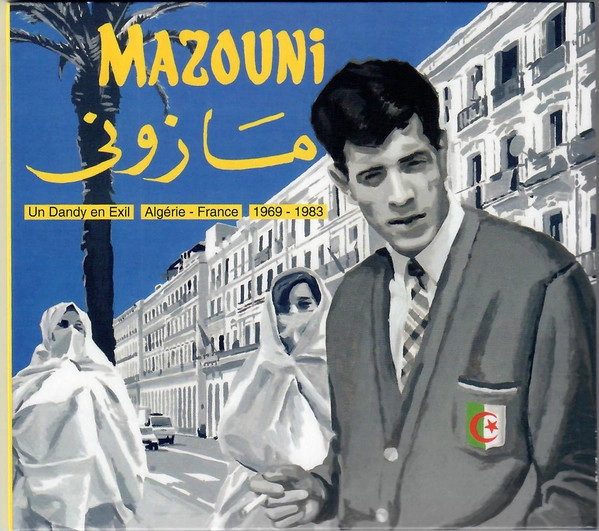
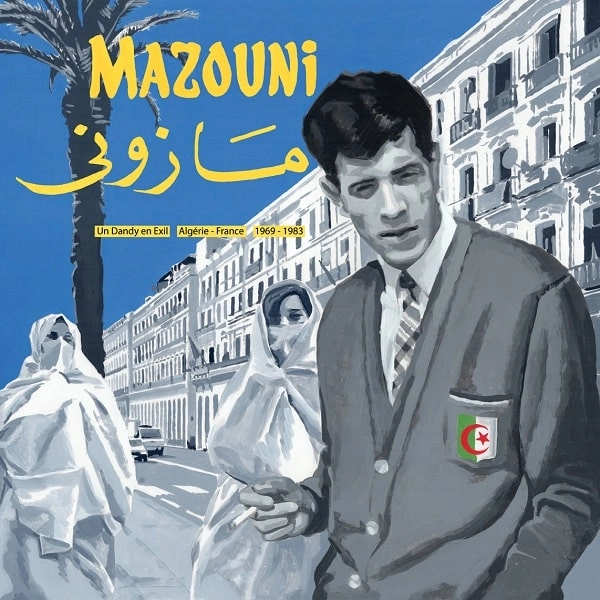
RACID TAHA がカバーしたことでも知られるアルジェリアを代表する男性歌手 MOHAMED MAZOUNI。1969~1983年のヒットチューンを集めたベスト盤的一枚。
・Born Bad Records present the first compilation dedicated to Mohamed Mazouni.
・Includes all of his never-reissued "hits" with, as a bonus, unobtainable songs such as "L'amour Maâk", "Bleu Délavé", or "Daag Dagui".
・At the end of the 1990s, the very wide distribution of Michèle Collery and Anaïs Prosaïc's documentary on Arabic and Berber scopitones highlighted the importance of Mazouni.
・Double LP version includes printed inner sleeve with liner notes both in French and English by Rabah Mezaouane (from Institut du monde arabe); Includes download code.
Mohamed Mazouni, born January 4, 1940 in Blida (The City of Roses), a city which had just turned twenty. His memory dragged around a lot of catchy refrains by Rabah Driassa and Abderrahmane Aziz, also natives of Blida, or by 'asri (modern music) masters Bentir or Lamari. He began his singing career in those years, chosing bedoui as a style. In June 1965, Algeria adopted a Soviet-style profile where everything was planned, even music. Mazouni, he followed his path, recording a few popular tunes, but he also was in the mood for traveling beyond the Mediterranean. During the 1950s and 1960s, Mohamed was dumbfounded by Oum Kalsoum's songs and scopitones. Fully immersed, he soaked up the songs of Dahmane El Harrachi, Slimane Azem, Akli Yahiaten, or Cheikh El Hasnaoui, but also those from the crazy years of twist and rock n' roll as embodied by Johnny Hallyday, Les Chaussettes Noires, or Les Chats Sauvages, not to mention Elvis Presley. Between 1970 and 1990, he had a series of hits. Mazouni, a dandy shattered by his century and always all spruced up who barely performed on stage, had greatly benefited from the impact of scopitones, the ancestors of music videos. His strength lay in Arabic lyrics all his compatriots could understand, and catchy melodies accompanied by violin, goblet drum, qanun, tar (a small tambourine with jingles), lute, and sometimes electric guitar on yé-yé compositions. Like a politician, Mazouni drew on all themes knowing that he would nail it each time. This earned him the nickname "Polaroid singer". Mohamed Mazouni crossed the 1960s and 1970s with his dark humor and unifying mix of local styles. Besides his trivial topics, he also denounced racism and the appalling condition of immigrant workers. However, his way of telling of high school girls, cars and pleasure places earned him the favors of France's young migrant zazous. At the end of the 1990s, the distribution of Michèle Collery and Anaïs Prosaïc's documentary on Arabic and Berber scopitones highlighted Mazouni's importance. Mazouni did not stop singing and even had a few local hits, always driven by a "wide targeting" ambition. This compilation, the first one dedicated to him, includes all of his never-reissued "hits" with, as a bonus, unobtainable songs such as "L'amour Maâk", "Bleu Délavé", or "Daag Dagui". CD version comes in digipack; Includes 24-page booklet.
・Born Bad Records present the first compilation dedicated to Mohamed Mazouni.
・Includes all of his never-reissued "hits" with, as a bonus, unobtainable songs such as "L'amour Maâk", "Bleu Délavé", or "Daag Dagui".
・At the end of the 1990s, the very wide distribution of Michèle Collery and Anaïs Prosaïc's documentary on Arabic and Berber scopitones highlighted the importance of Mazouni.
・Double LP version includes printed inner sleeve with liner notes both in French and English by Rabah Mezaouane (from Institut du monde arabe); Includes download code.
Mohamed Mazouni, born January 4, 1940 in Blida (The City of Roses), a city which had just turned twenty. His memory dragged around a lot of catchy refrains by Rabah Driassa and Abderrahmane Aziz, also natives of Blida, or by 'asri (modern music) masters Bentir or Lamari. He began his singing career in those years, chosing bedoui as a style. In June 1965, Algeria adopted a Soviet-style profile where everything was planned, even music. Mazouni, he followed his path, recording a few popular tunes, but he also was in the mood for traveling beyond the Mediterranean. During the 1950s and 1960s, Mohamed was dumbfounded by Oum Kalsoum's songs and scopitones. Fully immersed, he soaked up the songs of Dahmane El Harrachi, Slimane Azem, Akli Yahiaten, or Cheikh El Hasnaoui, but also those from the crazy years of twist and rock n' roll as embodied by Johnny Hallyday, Les Chaussettes Noires, or Les Chats Sauvages, not to mention Elvis Presley. Between 1970 and 1990, he had a series of hits. Mazouni, a dandy shattered by his century and always all spruced up who barely performed on stage, had greatly benefited from the impact of scopitones, the ancestors of music videos. His strength lay in Arabic lyrics all his compatriots could understand, and catchy melodies accompanied by violin, goblet drum, qanun, tar (a small tambourine with jingles), lute, and sometimes electric guitar on yé-yé compositions. Like a politician, Mazouni drew on all themes knowing that he would nail it each time. This earned him the nickname "Polaroid singer". Mohamed Mazouni crossed the 1960s and 1970s with his dark humor and unifying mix of local styles. Besides his trivial topics, he also denounced racism and the appalling condition of immigrant workers. However, his way of telling of high school girls, cars and pleasure places earned him the favors of France's young migrant zazous. At the end of the 1990s, the distribution of Michèle Collery and Anaïs Prosaïc's documentary on Arabic and Berber scopitones highlighted Mazouni's importance. Mazouni did not stop singing and even had a few local hits, always driven by a "wide targeting" ambition. This compilation, the first one dedicated to him, includes all of his never-reissued "hits" with, as a bonus, unobtainable songs such as "L'amour Maâk", "Bleu Délavé", or "Daag Dagui". CD version comes in digipack; Includes 24-page booklet.
ソングリスト
-
1.Mon Amour Il Est Gentil (1972)
-
2.Écoute Moi Camarade (1974)
-
3.Je N'aime Pas Le Jour, Je N'aime Pas la Nuit (1977)
-
4.Daag Dagui (1973)
-
5.Je Pense À Celle (1977)
-
6.Si Massoud (Je T'aime Et Je T'aimerai) (1981)
-
7.L'amour Mâak (1981)
-
8.Tu N'es Plus Comme Avant (1982)
-
9.Vingt Ans En France (1980)
-
10.Je Suis Seul (1975)
-
11.La Madrague (1969)
-
12.Clichy (1974)
-
13.Chérie Madame (1981)
-
14.Dis-Moi C'est Pas Vrai (1975)
-
15.Adieu La France (1976)
商品一覧・検索は
こちらから
こちらから


ニュース&特集 NEWS & FEATURES

2026.09.04
トピック

2026.09.04
トピック

2026.10.01
ヒップホップ・R&B
2026.10.01
日本のロック・J-POP

2026.10.01
昭和歌謡

2026.10.01
平成J-POP

2026.10.01
日本のロック・J-POP

2026.10.01
レゲエ

2026.09.30
ノイズ ・ アヴァンギャルド

2026.09.30
ハードロック・ヘヴィメタル

2026.09.30
ハードロック・ヘヴィメタル

2026.09.30
ソウル・ブルース

2026.09.30
ジャズ
2026.09.30
日本のロック・J-POP

2026.09.30
ラテン・ブラジル・ワールド





読み込み中...
アーティスト
タイトル
レーベル
詳細検索
読み込み中...
チェックしたアイテム RECENTLY VIEWED
チェックしたアイテムはありません

¥2,200
(税込)

¥2,189
(税込)
¥1,815
(税込)
¥2,619
(税込)


¥3,300
(税込)

¥2,629
(税込)
¥2,640
(税込)