


-

- VINYL ON DEMAND / IMPORT / LP(レコード) / VOD122 / 1006122989 / 2014年05月15日
 レコード
売切 注文不可LP1A Selene & Ether 27:09LP1B Collage for Low Tones 18:33 Ghosts 8:38 LP2A Clouds 8-15 26:15LP2B Nocturne 25:40 Lp3A Live Monterey 25:34LP3B Live Stanford 25:27LP4A Guitar Drone 8-15 14:42 CCRMA Voices 7:19LP4B Inner Landcapes Introduction 9:07 Manna 17:15notes to the tracksSelene & Ether 27:05Recorded in summer of 1980 with Paia modular, newly acquired Prophet 5 and homebuilt Radio Shack analog delay, recorded direct to cassette at home. Unreleased until now. This was my first recording that ever got radio airplay, from "Music From The Hearts of Space" on KPFA in Berkeley, CA. I think that was around my 17th birthday. A note to myself inside the cassette case reads, "The sound first dwells in darker figures that sometimes inhabit dreams, then slowly lifts, collecting energy from harmony. The last is a sea of time, the atmospheric pillow." An almost Vangelis-like grandiose middle section was a rare departure for me. Until I got the Prophet 5 I could never attempt a sound like that. A little story about this synthesizer: I was still 15 years old when I made friends with a college DJ named Rick Huber, who also worked at synth company Sequential Circuits. I wanted to start a band making noisy improvisations, so Rick introduced me to his co-worker Rick Davies. (We remained life-long friends, and made some rather embarrassing musical experiments with co-conspirator Jon Spencer.) Sequential's Prophet 5 was the first polyphonic synthesizer with digital memory, and it was very expensive in 1978. Unfortunately the first version of the Prophet was quite fragile and broke constantly, almost impossible to calibrate, and plagued by catastrophic component failures. Sequential offered an upgrade to their early customers, offering to exchange (for a fee) any Rev.1 Prophet 5 for an improved Rev.2. Then they sold the fragile Rev.1's to their employees (the only people who could keep them running) with a promise not to re-sell. The company never wanted to see them again. My friends at Sequential purchased a handful of these lemons, and kindly snuck one into my hands. Selene and Ether was one of the very first things I recorded with it. Collage for Low Tones 18:35 1980Recorded summer of 1980 direct to cassette, an improvisation with analog delay and Paia modular. I had completely forgotten about this recording until I started going through archives for this release.I built the analog delay from a circuit board sold through Radio Shack, called the "Electronic Reverb" kit. Nineteen years later (1999) I began to get back into analog modular synths after meeting Paul Schreiber, who had recently started a new modular company called Synthesis Technology. As Paul and I became friends, I learned that he once worked for Tandy Corporation, designing kits for Radio Shack. Paul had in fact designed the analog delay kit that I used so heavily during these early years. The instructions suggested modifications to allow feedback into self-oscillation, and a switch to slow down the clock, creating a very grungy echo. These modifications turned the delay into a crazy oscillator, one of my main instruments for creating noisy pieces like this one.Ghosts 8:42 1980Inside the cassette box where I found this recording, my notes say: "Ghosts is a sound collage consisting of many layers of randomly tuned sinusoidal frequencies, whose amplitudes were also randomly chosen. The sound was inspired by multiple resonances of the wind through a certain cave in the Sierra foothills." I think I was being a bit coy, as it sounds to me like an improvisation with Prophet 5 and Paia modular synth using resonant filters imparting different pitches from a pink noise source.Clouds 26:15 1983I remember being quite happy with this drone improvisation when I recorded it, but I never officially released it because some other pieces around that time felt more like a breakthrough. Apparently I made cassette copies for a few people to hear, as I have seen pictures of handmade tapes with this on them, called simply "Modal Improvisation." This performance employs a resonant all-pass filter using a Curtis chip that I built onto a blank circuit board, responsible for the shimmering stepped tones of the low drone.Nocturne 25:40 1983I remember working for several weeks to prepare the elements for Nocturne. I did not have a multitrack recorder at the time, but I had two cassette decks and a reel-to-reel. I assembled extra layers onto cassette, in order to mix to 1/4" reel while performing live instruments. I remember this piece being much harder to create than others at the time, and it felt less satisfying to me when finished. The original tape is 40 minutes long, and I wanted it to feel completely calm and stable, yet slowly changing around the steady drone, a sort of infinite music, acting in a certain way upon the mind only when played for very long durations. Alas, in the thirty years since attempting this sort of trancelike effect in very slow music, my attention span has gotten shorter, and I am rather surprised to look back at my youthfully obsessive attention to microscopic details.Live in Monterey CA September 15, 1983 25:30 These are the beginning and ending sections of a two hour ambient concert performed at an art exhibit opening by painter Todd Friedlander. Most of the performance consisted of nature recordings combined with very quiet drones. The closing section was an interpretation of the piece "Nocturne" that I had recorded the previous month, but that piece sounded different each time I played it.Live at Stanford University CA, March 13 1984 25:27This "concert" actually took place in my dorm room at the co-op house where I lived during my third and fourth years at university. I recorded most of Trances and Drones here (when I probably should have been studying.) My roommate Miguel Helft patiently tolerated my pile of electronics that cluttered the room. A few friends asked me if they could listen to me play, so I made this casual home concert for three or four people, and recorded it to my new Revox B77. The 90 minute recording turned out better than expected. Early in my efforts to release my own music, I made friends with an ardent listener in Köping, Sweden named Hans Fahlberg. After he discovered my first release Sunyata, Hans began writing me letters with funny cartoon illustrations of laughing heads prancing around naked on tiny legs. After I released Trances and Drones, Hans wrote me asking if I had any unreleased music, as he wanted to start a cassette label. This would be his first release. I didn't feel that my earliest experiments were suitable, so I sent him edits of the two live recordings that appear here. These became Robert Rich Live, catalog 001 on Psychout Productions. Hans soon changed his label name to Multimood Records and released my first LP Numena, and many excellent albums by artists including Peter Frohmader, Roedelius, O Yuki Conjugate, Paul Schütze, Jeff Greinke, and others.In the late 80s, the Freeman brothers in the U.K. replicated small quantities of Live and Inner Landscapes for their Auricle label. Among my early releases, Live was the only one that I did not remaster for CD, because I felt that it would not hold up to digital scrutiny. This vinyl version is the first official reprinting since those cassettes.3A Guitar Drone 8-15 14:46 1983I don't actually remember playing this. I discovered it while digging through the archives. I found several pieces from the summer of 1983, all untitled and described as "guitar drone" or "guitar rhythm." Most of them sound similar to each other. It appears I was aiming for a certain relationship between the echoed strumming and the cloudy loops made from brushing guitar strings lightly. I recorded two of those attempts to reel-reel tape, so I presume those were more "serious" or premeditated, while this version only shows up on a cassette master, like a practice version or an afterthought. Among the different attempts, this may be the most interesting, although perhaps not the highest fidelity.CCRMA Voices 7:22 1984This is one of the few computer compositions that I finished while taking the computer music course at Stanford's CCRMA, the Center for Computer Research in Music and Acoustics. It uses Bill Schottstaedt's PLA language to create a simple two-operator FM voice, with random pitch, duration and inflections within the range of a human voice. Inner Landcapes Introduction 9:12 1985This comes from a live concert performed in Berkeley, CA, later released as the 90 minute live cassette Inner Landscapes. In the late 1990s, Mike Griffin at Hypnos approached me about remastering some of my early work for CD. Inner Landscapes and Sunyata seemed worthy candidates at the time. I had to remove some material from Inner Landscapes to get it to fit onto CD. Except for this sequencer improvisation at the start, the remainder of that concert was deep and very slow; so I decided to cut this piece and keep the CD consistently deep and atmospheric. This intro remained an orphan until now. Manna 17:15 1980Here's another piece that I forgot about. It comes from the burst of recordings I made as soon as I got the Prophet 5 in 1980. This uses a patch technique called "random arpeggio" where each voice fades in and out at different rates by its own modulations, sounding a bit like tape loops. The bleepy tones come from the Paia modular, with tape echo adding its telltale warble.¥10,450 (税込)ご注文できません
レコード
売切 注文不可LP1A Selene & Ether 27:09LP1B Collage for Low Tones 18:33 Ghosts 8:38 LP2A Clouds 8-15 26:15LP2B Nocturne 25:40 Lp3A Live Monterey 25:34LP3B Live Stanford 25:27LP4A Guitar Drone 8-15 14:42 CCRMA Voices 7:19LP4B Inner Landcapes Introduction 9:07 Manna 17:15notes to the tracksSelene & Ether 27:05Recorded in summer of 1980 with Paia modular, newly acquired Prophet 5 and homebuilt Radio Shack analog delay, recorded direct to cassette at home. Unreleased until now. This was my first recording that ever got radio airplay, from "Music From The Hearts of Space" on KPFA in Berkeley, CA. I think that was around my 17th birthday. A note to myself inside the cassette case reads, "The sound first dwells in darker figures that sometimes inhabit dreams, then slowly lifts, collecting energy from harmony. The last is a sea of time, the atmospheric pillow." An almost Vangelis-like grandiose middle section was a rare departure for me. Until I got the Prophet 5 I could never attempt a sound like that. A little story about this synthesizer: I was still 15 years old when I made friends with a college DJ named Rick Huber, who also worked at synth company Sequential Circuits. I wanted to start a band making noisy improvisations, so Rick introduced me to his co-worker Rick Davies. (We remained life-long friends, and made some rather embarrassing musical experiments with co-conspirator Jon Spencer.) Sequential's Prophet 5 was the first polyphonic synthesizer with digital memory, and it was very expensive in 1978. Unfortunately the first version of the Prophet was quite fragile and broke constantly, almost impossible to calibrate, and plagued by catastrophic component failures. Sequential offered an upgrade to their early customers, offering to exchange (for a fee) any Rev.1 Prophet 5 for an improved Rev.2. Then they sold the fragile Rev.1's to their employees (the only people who could keep them running) with a promise not to re-sell. The company never wanted to see them again. My friends at Sequential purchased a handful of these lemons, and kindly snuck one into my hands. Selene and Ether was one of the very first things I recorded with it. Collage for Low Tones 18:35 1980Recorded summer of 1980 direct to cassette, an improvisation with analog delay and Paia modular. I had completely forgotten about this recording until I started going through archives for this release.I built the analog delay from a circuit board sold through Radio Shack, called the "Electronic Reverb" kit. Nineteen years later (1999) I began to get back into analog modular synths after meeting Paul Schreiber, who had recently started a new modular company called Synthesis Technology. As Paul and I became friends, I learned that he once worked for Tandy Corporation, designing kits for Radio Shack. Paul had in fact designed the analog delay kit that I used so heavily during these early years. The instructions suggested modifications to allow feedback into self-oscillation, and a switch to slow down the clock, creating a very grungy echo. These modifications turned the delay into a crazy oscillator, one of my main instruments for creating noisy pieces like this one.Ghosts 8:42 1980Inside the cassette box where I found this recording, my notes say: "Ghosts is a sound collage consisting of many layers of randomly tuned sinusoidal frequencies, whose amplitudes were also randomly chosen. The sound was inspired by multiple resonances of the wind through a certain cave in the Sierra foothills." I think I was being a bit coy, as it sounds to me like an improvisation with Prophet 5 and Paia modular synth using resonant filters imparting different pitches from a pink noise source.Clouds 26:15 1983I remember being quite happy with this drone improvisation when I recorded it, but I never officially released it because some other pieces around that time felt more like a breakthrough. Apparently I made cassette copies for a few people to hear, as I have seen pictures of handmade tapes with this on them, called simply "Modal Improvisation." This performance employs a resonant all-pass filter using a Curtis chip that I built onto a blank circuit board, responsible for the shimmering stepped tones of the low drone.Nocturne 25:40 1983I remember working for several weeks to prepare the elements for Nocturne. I did not have a multitrack recorder at the time, but I had two cassette decks and a reel-to-reel. I assembled extra layers onto cassette, in order to mix to 1/4" reel while performing live instruments. I remember this piece being much harder to create than others at the time, and it felt less satisfying to me when finished. The original tape is 40 minutes long, and I wanted it to feel completely calm and stable, yet slowly changing around the steady drone, a sort of infinite music, acting in a certain way upon the mind only when played for very long durations. Alas, in the thirty years since attempting this sort of trancelike effect in very slow music, my attention span has gotten shorter, and I am rather surprised to look back at my youthfully obsessive attention to microscopic details.Live in Monterey CA September 15, 1983 25:30 These are the beginning and ending sections of a two hour ambient concert performed at an art exhibit opening by painter Todd Friedlander. Most of the performance consisted of nature recordings combined with very quiet drones. The closing section was an interpretation of the piece "Nocturne" that I had recorded the previous month, but that piece sounded different each time I played it.Live at Stanford University CA, March 13 1984 25:27This "concert" actually took place in my dorm room at the co-op house where I lived during my third and fourth years at university. I recorded most of Trances and Drones here (when I probably should have been studying.) My roommate Miguel Helft patiently tolerated my pile of electronics that cluttered the room. A few friends asked me if they could listen to me play, so I made this casual home concert for three or four people, and recorded it to my new Revox B77. The 90 minute recording turned out better than expected. Early in my efforts to release my own music, I made friends with an ardent listener in Köping, Sweden named Hans Fahlberg. After he discovered my first release Sunyata, Hans began writing me letters with funny cartoon illustrations of laughing heads prancing around naked on tiny legs. After I released Trances and Drones, Hans wrote me asking if I had any unreleased music, as he wanted to start a cassette label. This would be his first release. I didn't feel that my earliest experiments were suitable, so I sent him edits of the two live recordings that appear here. These became Robert Rich Live, catalog 001 on Psychout Productions. Hans soon changed his label name to Multimood Records and released my first LP Numena, and many excellent albums by artists including Peter Frohmader, Roedelius, O Yuki Conjugate, Paul Schütze, Jeff Greinke, and others.In the late 80s, the Freeman brothers in the U.K. replicated small quantities of Live and Inner Landscapes for their Auricle label. Among my early releases, Live was the only one that I did not remaster for CD, because I felt that it would not hold up to digital scrutiny. This vinyl version is the first official reprinting since those cassettes.3A Guitar Drone 8-15 14:46 1983I don't actually remember playing this. I discovered it while digging through the archives. I found several pieces from the summer of 1983, all untitled and described as "guitar drone" or "guitar rhythm." Most of them sound similar to each other. It appears I was aiming for a certain relationship between the echoed strumming and the cloudy loops made from brushing guitar strings lightly. I recorded two of those attempts to reel-reel tape, so I presume those were more "serious" or premeditated, while this version only shows up on a cassette master, like a practice version or an afterthought. Among the different attempts, this may be the most interesting, although perhaps not the highest fidelity.CCRMA Voices 7:22 1984This is one of the few computer compositions that I finished while taking the computer music course at Stanford's CCRMA, the Center for Computer Research in Music and Acoustics. It uses Bill Schottstaedt's PLA language to create a simple two-operator FM voice, with random pitch, duration and inflections within the range of a human voice. Inner Landcapes Introduction 9:12 1985This comes from a live concert performed in Berkeley, CA, later released as the 90 minute live cassette Inner Landscapes. In the late 1990s, Mike Griffin at Hypnos approached me about remastering some of my early work for CD. Inner Landscapes and Sunyata seemed worthy candidates at the time. I had to remove some material from Inner Landscapes to get it to fit onto CD. Except for this sequencer improvisation at the start, the remainder of that concert was deep and very slow; so I decided to cut this piece and keep the CD consistently deep and atmospheric. This intro remained an orphan until now. Manna 17:15 1980Here's another piece that I forgot about. It comes from the burst of recordings I made as soon as I got the Prophet 5 in 1980. This uses a patch technique called "random arpeggio" where each voice fades in and out at different rates by its own modulations, sounding a bit like tape loops. The bleepy tones come from the Paia modular, with tape echo adding its telltale warble.¥10,450 (税込)ご注文できません -
- SOUNDSCAPE PRODUCTIONS / IMPORT / CD / 1001239362 / 2010年06月22日
 CD
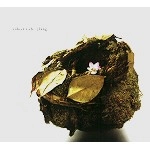
売切 注文不可30年に亘り多数の作品を発表し、アンビエント/ニューエイジ・シーンに大きな影響力を持つ、米カリフォルニアのアーティスト、'10年作。名門スタンフォード大学に学び、高名なCCMRA(Center for Computer Research in Music and Acoustics)に関係したことで、電子音楽や非西洋音楽などへの広い音楽的関心を持った氏。90年代にはSteve Roach、Lustmord(Brian Williams)、Ian Boddyらとの共作があります。初期にJohn CageやTerry Riley、または ClusterやKlaus Schulzeの影響を受け、いわゆるアンビエント/ニューエイジというよりもプログレ/ジャーマン・ロック系統のエレクトロニックなサウンドを作ります。南洋の花イランイランをモチーフにした今作。MrdungamやBansuriのアジア楽器、フルート、ストリングス、ドラムなどの生楽器を多く取り入れながら、シンセなどの電子音と同じ位相で調和しているサウンドの見事さは特筆すべきところで、つまりはミックスも素晴らしいということです。アンビエントというよりエレクトロニカに近い感触になっています。例えば、ポストロック風のエレキギターが幽玄な”Tmarack”、哀調を帯びたチェロとヴァイオリンと雨音のような電子音がゆったりと隙間のあるリズムで絡むチルアウトな'First Rain'などです。イランイランの花は香水やアロマの原料に使われるような香り高いものだそうですが、今作には花の香気を感じさせる、あるいは花の香りがもたらす漠とした幻想をなぞり書きしたような趣があります。体感的な一枚です。【三面Digipack仕様】¥2,724 (税込)ご注文できません
CD
売切 注文不可30年に亘り多数の作品を発表し、アンビエント/ニューエイジ・シーンに大きな影響力を持つ、米カリフォルニアのアーティスト、'10年作。名門スタンフォード大学に学び、高名なCCMRA(Center for Computer Research in Music and Acoustics)に関係したことで、電子音楽や非西洋音楽などへの広い音楽的関心を持った氏。90年代にはSteve Roach、Lustmord(Brian Williams)、Ian Boddyらとの共作があります。初期にJohn CageやTerry Riley、または ClusterやKlaus Schulzeの影響を受け、いわゆるアンビエント/ニューエイジというよりもプログレ/ジャーマン・ロック系統のエレクトロニックなサウンドを作ります。南洋の花イランイランをモチーフにした今作。MrdungamやBansuriのアジア楽器、フルート、ストリングス、ドラムなどの生楽器を多く取り入れながら、シンセなどの電子音と同じ位相で調和しているサウンドの見事さは特筆すべきところで、つまりはミックスも素晴らしいということです。アンビエントというよりエレクトロニカに近い感触になっています。例えば、ポストロック風のエレキギターが幽玄な”Tmarack”、哀調を帯びたチェロとヴァイオリンと雨音のような電子音がゆったりと隙間のあるリズムで絡むチルアウトな'First Rain'などです。イランイランの花は香水やアロマの原料に使われるような香り高いものだそうですが、今作には花の香気を感じさせる、あるいは花の香りがもたらす漠とした幻想をなぞり書きしたような趣があります。体感的な一枚です。【三面Digipack仕様】¥2,724 (税込)ご注文できません -

- IMPORT / CD / 1 / 1000317056 / 1995年04月13日
CD
売切 注文不可¥2,849 (税込)ご注文できません -
- IMPORT / その他 / 11077 / 1007937940
CD
廃盤87+'91/US AMBIENT,TRIBALご注文できません

チェックしたアイテム RECENTLY VIEWED
チェックしたアイテムはありません

こちらから


ニュース&特集 NEWS & FEATURES

2026.10.15
トピック

2026.09.04
トピック

2026.09.04
トピック

2026.09.01
トピック

2026.10.20
ソウル・ブルース
2026.10.20
パンク
2026.10.20
ジャズ

2026.10.20
ハードロック・ヘヴィメタル

2026.10.20
ハードロック・ヘヴィメタル

2026.10.20
ソウル・ブルース
2026.10.20
クラブ・ダンス
2026.10.20
ヒップホップ・R&B
2026.10.20
ヒップホップ・R&B

2026.10.20
ラテン・ブラジル・ワールド



読み込み中...
アーティスト
タイトル
レーベル
詳細検索
読み込み中...
チェックしたアイテム RECENTLY VIEWED
チェックしたアイテムはありません